
Clear aligners have revolutionized orthodontic treatment, offering an alternative to conventional fixed braces. One critical step shared by both treatment modalities is accurate and comprehensive record-taking.
Patient records are more than just diagnostic tools; they are essential to effective treatment planning. Records must be captured with precision to help ensure that planned tooth movements are executed effectively and efficiently throughout the patient’s NDX Aligners treatment journey.
Patient Photos
  |
  |
  |
Patient photos are essential for developing a customized treatment plan. For extraoral photos, we recommend capturing a frontal view with the patient smiling, a frontal view without smiling, and a side profile photo.
The smiling frontal photo helps assess the patient’s smile line and the midline of the upper and lower arches. The non-smiling frontal photo allows evaluation of transverse asymmetries, while the side profile photo provides insights into the patient’s lower facial height and skeletal relationship.
These photos serve as important references when determining the appropriate treatment approach for each unique malocclusion.
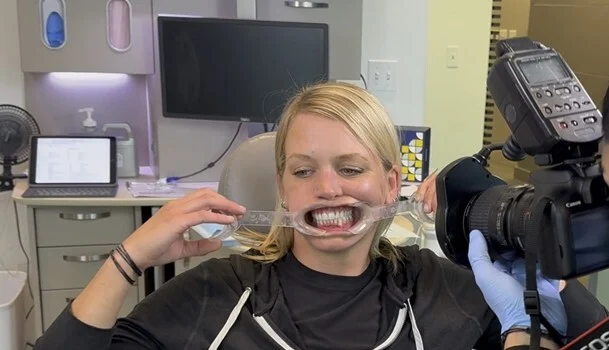
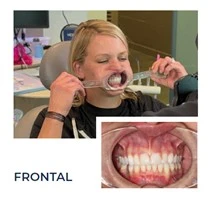
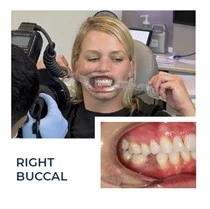
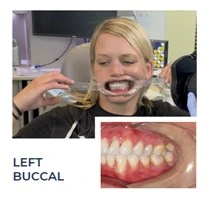
Intraoral photos are equally important. We recommend submitting lower occlusal, upper occlusal, frontal, left buccal, and right buccal views.
Occlusal photos of the upper and lower arches reveal details such as tooth alignment, arch form, and restorative status. The frontal, left buccal, and right buccal photos provide critical information about midline shifts, canine and molar relationships, overbite, and overjet.
These photos also allow us to compare the patient’s bite with the submitted impressions. When discrepancies arise, the more stable bite relationship can be adapted to the 3D dental model in the treatment viewer.
To learn more about how to capture patient photos, read the NDX Aligners Photo Records guide.
Importance of Radiographs

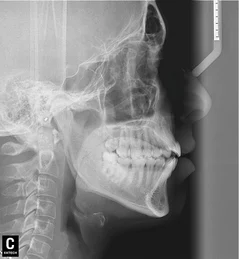
Panoramic radiographs and lateral cephalometric radiographs can add significant value to treatment planning.
Panoramic radiographs assist in identifying implants, pathologies, impacted teeth, and the condition of the supporting bone and periodontium. Lateral cephalometric radiographs provide insights into the patient’s skeletal and dental relationships by allowing analysis of relevant anatomical structures.
Impressions (Digital or Analog)

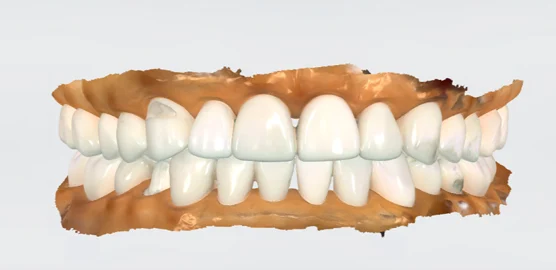
Accurate, defect-free physical impressions or digital scans are indispensable for successful diagnosis and treatment planning. These records are used to create 3D digital dental models, which form the basis for generating tooth movement simulations and, ultimately, the individual aligner steps.
Digital models have proven to be reliable alternatives to traditional plaster casts, offering precision and convenience in modern orthodontic practice.¹
Bite registration is another critical component of record-taking. The bite must accurately represent the patient’s occlusion between the upper and lower arches.
Inaccurate bite registration can result in a 3D digital dental model displaying incorrect dental relationships, potentially leading to a suboptimal treatment plan and unwanted interferences between the arches.
Comprehensive records enable the creation of a detailed and realistic treatment roadmap tailored to each patient’s unique needs.
Why Do Good Records Help Clear Aligner Fit & Movement Predictability?
Clear aligners work by applying gentle, controlled forces to the teeth. The teeth move incrementally with each aligner step until they reach their desired positions.²
Because of this mechanism, it is important that manufactured trays fit properly over the patient’s teeth. This highlights the importance of accurate impressions or scans captured by the clinician.
At NDX, we accept records that accurately capture the dentition and surrounding anatomical structures. Missed teeth, double scans, holes, and impression tears should be avoided, as these defects can affect the accuracy of the resulting dental model.
Inaccurate records can contribute to poorly fitting aligners, which may affect tooth movement and potentially prolong treatment.
By taking complete and accurate records, we help ensure that NDX Aligners can function as intended and support predictable tooth movement throughout treatment.
Periodic Records for Monitoring Progress and Adjusting Treatment
In addition to initial records, documenting the patient’s progress throughout treatment can be valuable.
In particularly challenging cases, such as those involving extractions or A-P discrepancies, tracking the patient’s progress may help clinicians identify potential causes of loss of track. When deviations occur, timely adjustments can be made to the treatment plan.
This may involve creating new aligners, incorporating additional auxiliaries, or modifying force application.
Without periodic records, clinicians may have less information available to identify these deviations, potentially resulting in suboptimal outcomes or extended treatment durations.
New Records for Refinement and Finishing
Following execution of the initial clear aligner treatment plan, a refinement stage may be needed for additional fine-tuning and finishing. This helps address areas where further expression of planned tooth movements may be needed.³
Fully updated records are essential at this stage. They allow areas requiring refinement to be identified and ensure that any additional aligners are tailored to the patient’s current dental position.
Conclusion
Accurate and comprehensive record-taking is a cornerstone of clear aligner treatment. From diagnosis and treatment planning to aligner fitting, progress monitoring, and refinement, precise documentation helps support predictable results, patient satisfaction, and treatment efficiency.
Get Started with NDX Aligners Today
References
-
Rischen RJ, Breuning KH, Bronkhorst EM, Kuijpers-Jagtman AM (2013). Records Needed for Orthodontic Diagnosis and Treatment Planning: A Systematic Review. PLoS ONE, 8(11): e74186. doi:10.1371/journal.pone.0074186
-
AlMogbel, A. (2023). Clear Aligner Therapy: Up-to-date review article. Journal of Orthodontic Science, 12:37. https://doi.org/10.4103/jos.jos_30_23
-
D’Antò, V., Bucci, R., De Simone, V., Huanca Ghislanzoni, L., Michelotti, A., & Rongo, R. (2022). Evaluation of Tooth Movement Accuracy with Aligners: A Prospective Study. Materials, 15(7), 2646. https://doi.org/10.3390/ma15072646


