Partials

Partials

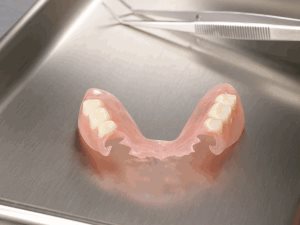
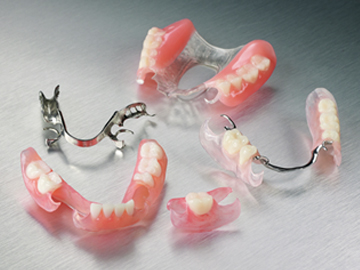
Partially edentulous patients are a growing population and the clinicians treating them will be in high demand during the coming years. NDX has a complete portfolio of partials for every situation, including the newest in flexible solutions. Regardless of the demands of the patient, we can design a partial that will exceed all expectations.
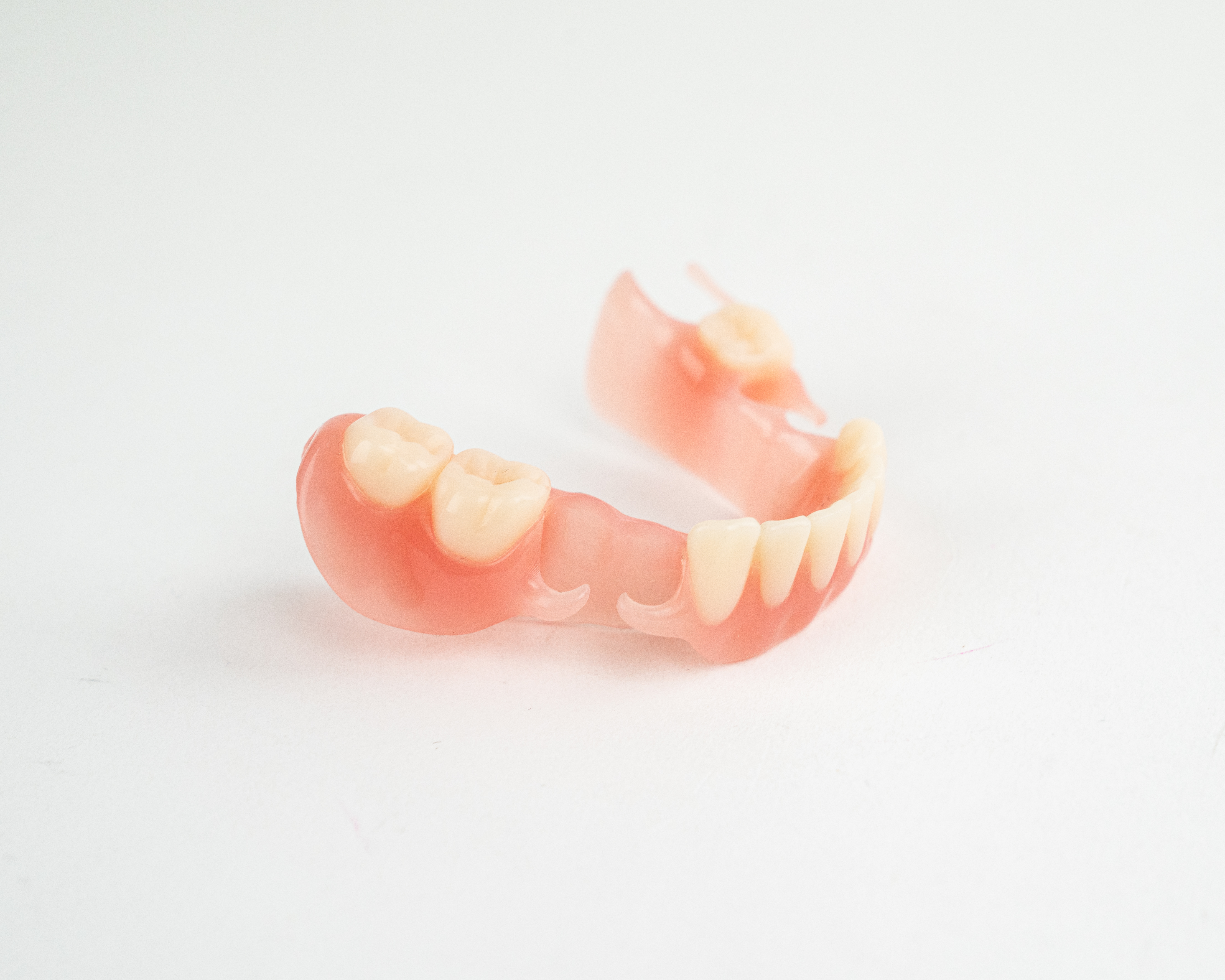
FP3D™

Indications

  • Replacement of one or more missing teeth in partially edentulous patients
  • Metal-free solution for patients with esthetic concerns or metal sensitivities
  • High esthetic demand cases with no visible metal clasps
  • Patients seeking improved comfort and flexibility compared to rigid frameworks

Contraindications

  • Long-span distal extension cases requiring greater rigidity
  • Heavy occlusal forces or parafunctional habits
  • Cases anticipating extensive future modifications or relines
  • Known allergy or hypersensitivity to resin components

Benefits of FP3D

  • Dual-cure chemistry delivers print accuracy with the fatigue resistance of injected resin
  • Tested to last beyond three years
  • Semi-translucent shades that blend with natural gingiva
  • Polishes like acrylic with no gumming or shredding
  • Low water sorption and stain resistant
  • Digitally archived for reprints

FP3D™ Digital Advantage

Every FP3D case is archived as a digital file. If a patient loses or damages their partial, NDX can reprint from the original design with no new impression needed, provided the tissue hasn't changed.


Tips for a Successful FP3D Case

  • Digital scan or traditional impression both accepted
  • Send bite registration and tooth shade
  • Note clasp placement and undercut preferences on the Rx
  • Specify FP3D on the prescription
  • Condition in room-temperature water at least 12 hours before delivery
  • Instruct patients to clean with mild soap and warm water, and dry overnight when not worn

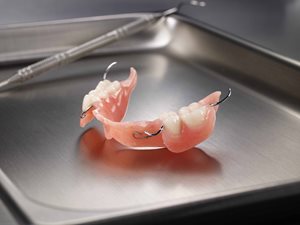
Valplast®

Indications

  • Most traditional partial application
  • Metal sensitivity or acrylic allergy

Contraindications

  • Need for more rigid appliance due to poor soft tissue support
  • Not recommended for immediates
  • Minimal vertical clearance, less than 5mm

Benefits of Valplast

  • Comfort: Thin, lightweight, and flexible
  • Aesthetic and biocompatible
  • Tissue or tooth prep not required
  • More durable than acrylic

Valplast® Hot Tip

Just before delivery, immerse the partial in hot tap water for final patient customization. This hot water bath increases flexibility and adaption of the flexible partial, improving patient comfort and ease of insertion.

Tips for a Successful Valplast® Case

  • Use alginate impression material
  • Send poured model showing vestibular extension
  • Send bite registration and tooth shade
  • Try-in recommended for bilateral free end partials

Dental Insurance Codes

  • D5225 - Maxillary Partial Denture - flexible base including any clasps, rests, and teeth
  • D5226 - Mandibular Partial Denture - flexible base including any clasps, rests, and teeth

Cast Partials

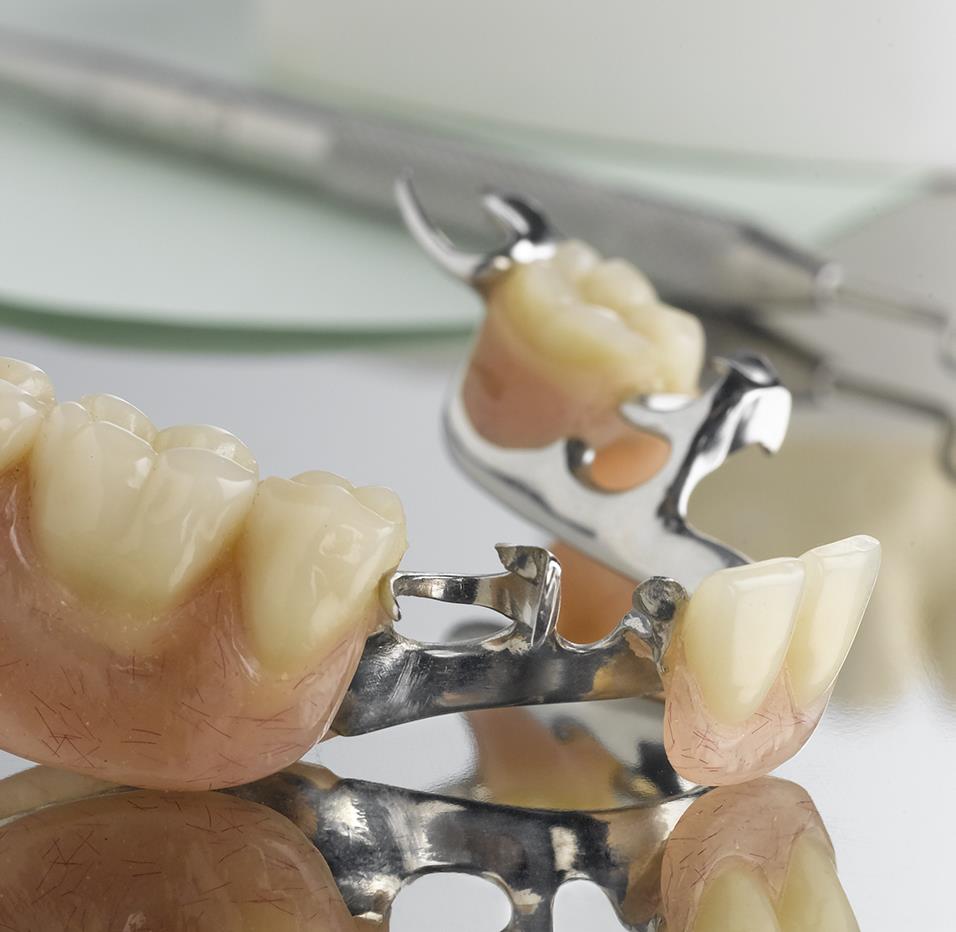
NDX’s high-strength cast metal partials are made with cobalt-chrome alloy. Our alloy features a refined surface that polishes to a high-mirrored shine and is resistant to plaque buildup and are nickel-free, beryllium-free and iron-free. When a patient requires the strength of a cast partial, but with the aesthetics of a flexible partial, NDX’s hybrid partial is an excellent choice. Our hybrid partial consists of a cobalt-chrome cast metal subframe with flexible clasps or saddles. Clasps can be effectively hidden by crafting them from our clear or tissue-shaded Valplast or Duraflex thermoplastic materials.

Benefits

  • Less invasive and less expensive than bridges or implants.
  • Cobalt-chrome alloy increases adjustability while still limiting breakability.
  • High strength alloy also makes for thinner frameworks and stronger clasps.
  • Perfect for patients with certain metal allergies.

Indications

  • To replace several teeth in the same quadrant or both quadrants of the same arch.
  • As a temporary replacement for missing teeth in a child.
  • To replace missing teeth for patients who do not want a fixed bridge or implants.
  • To serve as a splint to support periodontally involved teeth.
  • For patients who maintain good oral hygiene.

Contraindications

  • Lack of suitable teeth in the arch to support, stabilize, and retain the removable prosthesis.
  • Rampant caries or severe periodontal conditions that threaten the remaining teeth in the arch.
  • A lack of patient acceptance for esthetic reasons.
  • Chronic poor oral hygiene.

What to Send

  • Upper and lower models or impressions with tooth preparations
  • Tooth shade
  • Bite registration

Dental Insurance Codes

  • D5213 - Maxillary partial denture - cast metal framework with resin denture bases (including any conventional clasps, rests and teeth)
  • D5214 - Mandibular partial denture - cast metal framework with resin denture bases (including any conventional clasps, rests and teeth)
  • D5281 - Removable unilateral partial denture - one piece cast metal (including clasps and teeth)
  • D5421 - Adjust partial denture (maxillary)
  • D5422 - Adjust partial denture (mandibular)
  • D5620 - Repair cast framework
  • D5630 - Repair or replace broken clasp
  • D5640 - Replace broken teeth (per tooth)
  • D5650 - Add tooth to existing partial denture
  • D5660 - Add clasp to existing partial denture
  • D5670 - Replace all teeth and acrylic on cast metal framework (maxillary)
  • D5671 - Replace all teeth and acrylic on cast metal framework (mandibular)

Acrylic Partials

There are times when a cost-modified treatment plan is needed. Acrylic partials can be prescribed in a variety of situations. A variety of retention options are available, including cast clasps, wrought clasps, ball clasps, and more.